
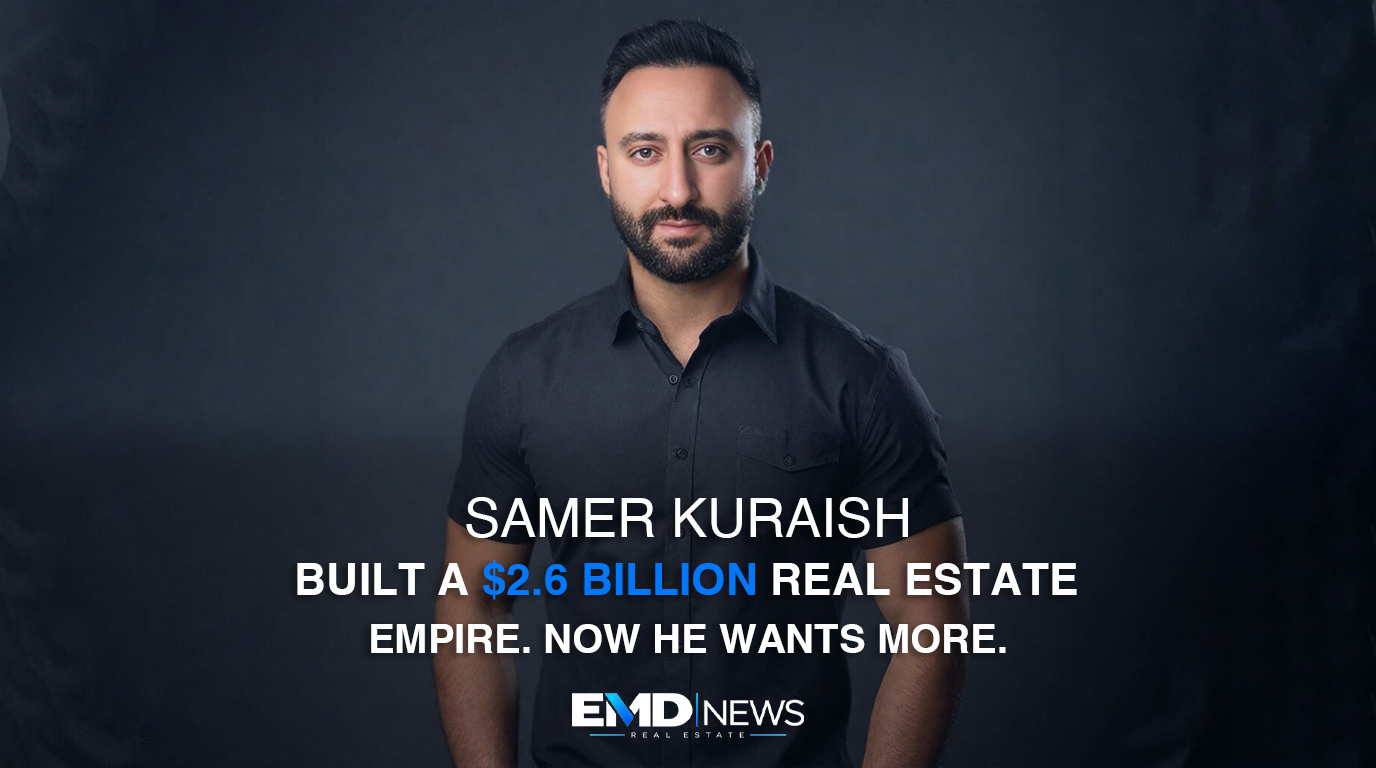
Samer Kuraishi has come a long way since obtaining his real estate license at the age of 18.
Kuraishi, 45, is the founder of the ONE Street Company that has held the no. 1 ranking among Washington, D.C. area mega teams with more than $2.6 billion in sales and more than 5,900 transactions since 2017. The residential and commercial real estate brokerage covers D.C., Maryland, Virginia and South Florida and has 52 agents.
“We’re a boutique firm, and I also call it more of a tech company,” Kuraishi said. “Real estate is a very archaic industry. I started when there was carbon paper in 1999, no multiple listing service, no virtual maps and using maps as my navigation. With technology the world changed. It didn’t matter where your company was. It mattered who you were.”
Kuraishi, who worked on short sale negotiations and foreclosures for several years in the 2000s, starting working with Zillow in 2011 after the crash when many agents left the industry.
“I stayed in and ran to the fire,” Kuraishi said. “Zillow was a lead generator, and I bought a ZIP Code in 2011 as a space for people looking for inquiries on houses. I went from a hundred-some dollars in spending to $30,000-plus within a month. It was real estate in the clouds and Zillow was leveraging listings from other agents in various ZIP Codes. From the dip to the rise, this is where lead flow created recruiting, and then technology came into play. Zillow was a trampoline for us as a company. That allowed us to build technology systems.”
Kuraishi said it’s been important for his brokerage to find talent that helps make it successful. He looks for entrepreneurs, and their personality was important because the consumer experience is critical, he said.
First impressions are everything when agents are dealing with clients.
“You want to control your culture and control your environment and have talented people that help each other,” Kuraishi said. “I didn’t like the Save by the Bell pettiness. If you can control your environment, it also creates a vibe where people are helping each other. I was able to build something of a family and competitive environment. I was also driving leads, technology and education. Real estate is a difficult business and roller coaster ride from hell, however, and the biggest problem I’ve seen in this business is that nobody trains anybody. They hire people, but the leadership is not there and they pivot to a different career.”
Kuraishi also advises hedge funds and financial institutions on housing trends and forecasts in the region and nationally. He said he’s always looking ahead to find a competitive advantage. He’s in partnership with banks that do lower mortgage rates with less fees; he’s building other revenue streams; he’s building credit repair; and he’s building an investment side for flipping properties.
A native of the D.C. area whose dad was an agent, Kuraishi got his license after finishing high school looking for an opportunity. He said he was waiting tables when he was asked about a foreclosure. He figured it out and sold it and made $5,000 and left the service industry for good.
“I wanted to be my own boss,” Kuraishi said. “I didn’t want to go to work and have to look at the clock. I don’t call this work anymore. I’m building futures and as you evolve as a leader you are controlling people’s lives.”
Kuraishi started working with his dad’s brokerage soon after opening his own office and hired his own agents forming his team. In 2017, he formed his own brokerage because he said he needed to evolve into a new world and branding and become more technology focused.
“Before CRMs, which are contact management systems, agents didn’t know what ROI meant, cost-per-contact and how to use SEO,” Kuraishi said. “Agents don’t have money so I was able to build something. Reverse engineering in life creates jobs and also makes you understand risk levels. I was able to build a data department to understand people’s lead flow and where our money is going. I was able to build a transaction coordinator department where agents don’t have to write their offers anymore so they can focus on the consumer.”
Kuraishi said he expects more than $300 million in residential transactions in 2026, up from $225 million in 2025 and expects $500 million in 2027. He said the increase shows training matters, and they have good lead flow. He said he helps with any deals from falling apart.
Besides working with buyers and sellers on the residential side, Kuraishi has his hand in the commercial sector dealing with leasing and sales and ground-up construction while he owns more than 500,000 square feet of commercial properties that he rents out.
As for his forecast going forward, Kuraishi said there continues to be a slowdown because of fear in the marketplace. But there continues to be a lot of money out there from investors and buyers. It’s an active market around the nation’s capital.
“You have so much construction going on for rental buildings,” Kuraishi said. “Commercial space is being eaten alive or being converted. Rates will come down at some point. If I buy a house for $800,000 at 8% and buy a house for $1 million at 7%, you’re still cheaper at $800,000.”
That doesn’t mean there aren’t issues. Property values continue to increase, and that means there will be a lot of people who will have to rent instead of buy, Kuraishi said. Even if mortgage rates come down, some people don’t have the salaries to purchase with multiple offers on homes that drive up prices further, he noted.
During 2027, Kuraishi said he will be spending a lot of money on digital leads that gives him an opportunity to grab more market share. The brokerage does well with organic traffic, and the more leads they get enables it to deliver appointments to agents. That will create recruiting on its own, he said.
Kuraishi encourages agents to align themselves with the right leaders and stop chasing money. When there’s fear in the marketplace, agents tend to run around and waste their careers because they think the grass is greener on the other side.
“I always tell anybody to work with people you like; work with people who don’t talk over your head; and work with people you can get a hold of because you need support,” Kuraishi said. “You need the right training and foundation. You should be interviewing the broker on how they are going to treat you and what they are going to give you, what systems they have and how they are going to help you learn. People don’t understand that. They just get their license and hang it and get caught up in the limelight. You have to work really hard. It’s a joke. It’s not the One Million Dollar Listing on television. You have to earn it. Even me, I have to work 100 times harder. Everyone wants instant gratification, but it doesn’t happen like that. You have to have discipline.”
While there will continue to be disruption in the marketplace, Kuraishi said people should buckle up, stop worrying and think ahead. They should focus on being a partner for consumers and educating them.
“And don’t put money first. Put people first.”